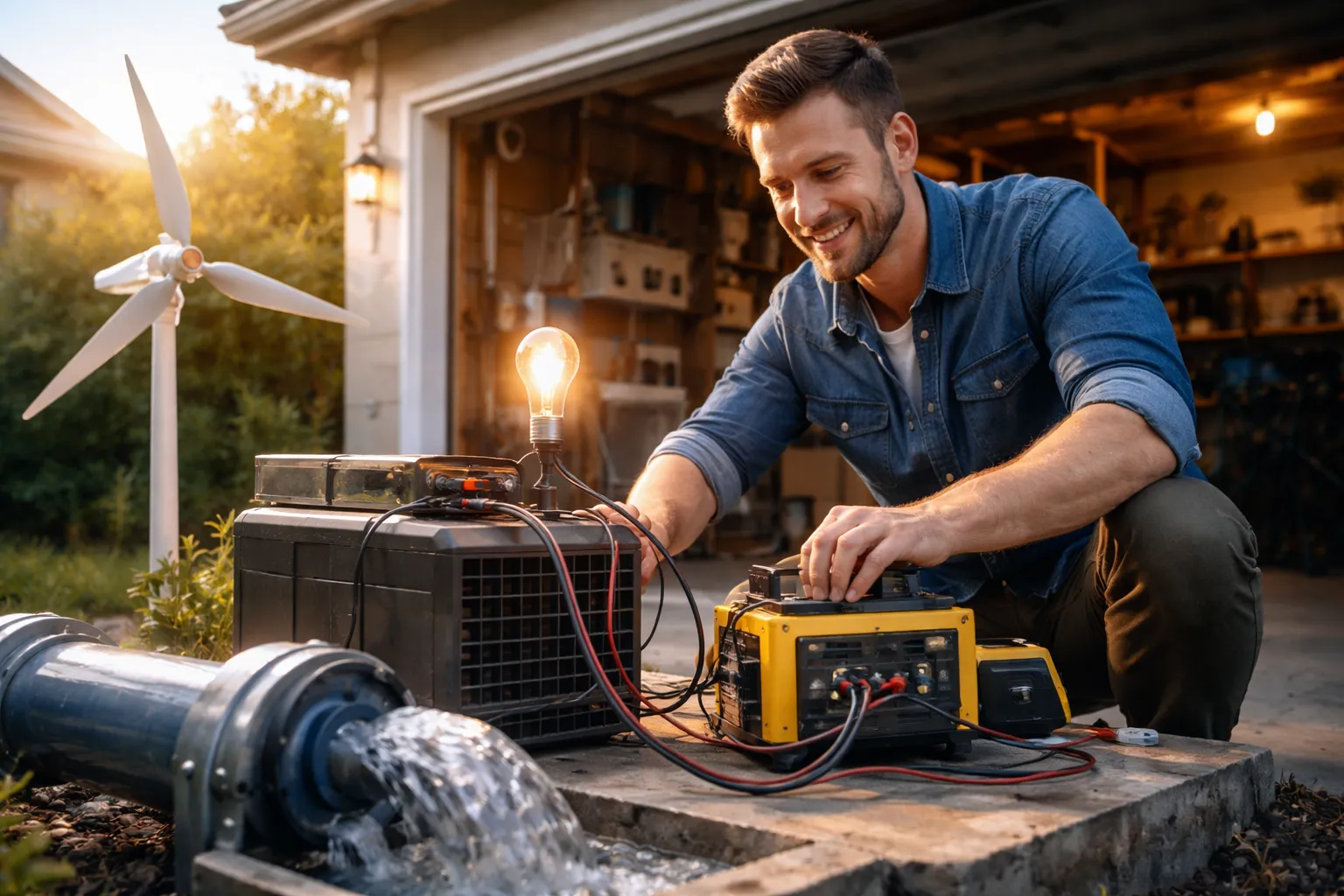
I still remember the exact moment it happened.
It was a Tuesday evening in July, the kind of sticky, suffocating Texas heat that makes you want to live in your freezer.
My daughter was doing homework.
My wife was on a work call.
Then: click. Everything went dark.
No air conditioning.
No refrigerator hum.
No Wi-Fi.
Just the sound of the neighborhood going quiet, all at once.
What made it worse? That was the third blackout in two months.
Every time it happened, we’d lose food, miss deadlines, and sit there helpless staring at our phones as the battery ticked down, waiting for a power company that clearly didn’t care whether my family was comfortable.
Or safe.
The worst part wasn’t the darkness.
It was the feeling of being completely at the mercy of a system I couldn’t control.
That night, I promised myself I’d find a way to never feel that powerless again.
What I eventually discovered surprised me. It wasn’t solar panels. It wasn’t a gas generator.
It was something much simpler and much cheaper.
And here’s what surprised me most the information had been out there the whole time.
Most people just don’t know where to look.
If you’re searching for how to generate electricity at home during a power outage cheaply, you’re in exactly the right place.
Let me walk you through everything I learned.
Short on time? If you want to skip ahead and see the solution that finally worked for me, you can take a look at the system here. Otherwise, keep reading understanding the problem is half the battle.
Table of Contents
Why Electricity Bills Keep Climbing (And Why Blackouts Are Getting Worse)
Here’s what nobody tells you: the U.S. power grid is aging fast.
Much of the infrastructure was built in the 1950s and 60s and designed to last about 50 years.
We’re well past that now.
Meanwhile, extreme weather events are becoming more frequent and more severe.
Summer heatwaves that break records. Winter storms that knock out power for millions.
Wildfires that force grid shutdowns.
Every one of these events strains a system that was never built to handle modern electricity demand.
The result? More outages.
Longer outages.
and electricity bills that keep creeping up, year after year, because utilities keep patching an old system with expensive bandaids and passing the cost straight to you.
| Metric | Reality |
| Average annual outage time per U.S. household | 8+ hours and trending upward |
| Estimated food loss from a single 4-hour blackout | $200–$400+ |
| Rise in average U.S. electricity bills (last 3 years) | 15%+ in many states |
Here’s what that means in practice:
- The average U.S. household loses power for around 8 hours per year and that number is rising
- Food spoilage from a single 4-hour outage can cost $200 $400+
- Remote workers can lose entire days of billable productivity
- Medical equipment that depends on power becomes a life-safety issue fast
- Electric bills have risen over 15% in many states in just the last 3 years
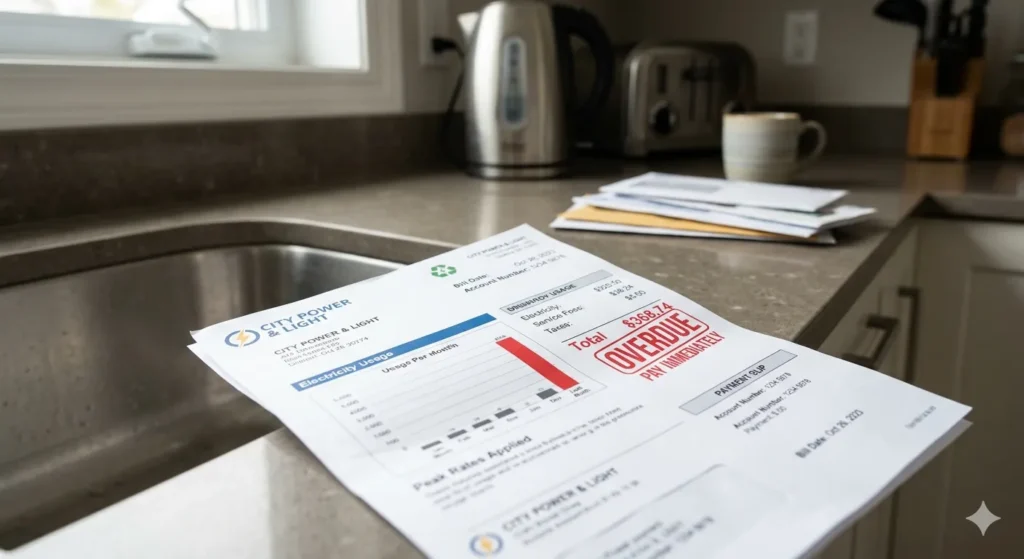
You’re not imagining it.
This is a real, growing problem, and the standard advice most people get doesn’t actually solve it.
Most people try two solutions.
Both fail them.
Here’s why and what actually works instead.
Traditional Solutions and Why They Fall Short
When people start researching cheap home electricity backup, they usually land on two options: rooftop solar panels or a gas generator.
Both sound logical. Both have serious, often deal-breaking problems.
| Solution | Upfront Cost | Running Cost | Indoor Safe? | Works in Outage? | Verdict |
| Rooftop Solar | $15,000 $30,000 | Low | Yes | Only with battery ($$$) | ❌ Expensive |
| Gas Generator | $500 $3,000 | High (fuel) | No CO risk | Yes, but loud | ❌ Risky & costly |
| Portable Power Station | $200 $1,500 | Very low | Yes | Yes | ✅ Best value |
| UPS (Uninterruptible Power Supply) | $80 $300 | Near zero | Yes | Short outages only | ✅ Good for 1–2 hrs |
Rooftop solar is a great long-term investment, but if you’re renting, have a shaded roof, or simply can’t front $20K upfront, it’s not a realistic option.
Gas generators are noisy, produce carbon monoxide (meaning you can’t use them indoors or even in the garage), and cost $50–$100+ per week in fuel during extended outages.
Most HOAs ban them outright.
So most people end up stuck.
They know they need backup power.
They just can’t find an affordable, realistic path forward.
Most people don’t realize this: the gap between what actually works and what’s commonly recommended is enormous.
The best solutions almost never get the loudest marketing.
The Hidden Alternative Most Homeowners Never Consider
Here’s where things changed for me.
The problem isn’t that affordable power backup doesn’t exist.
The problem is that most people don’t know which combination of equipment to use or how to size a system for their actual needs.
The companies selling $30,000 solar installations have no incentive to tell you that a $500 setup, a portable power station paired with a small foldable solar panel, can keep your fridge running, your Wi-Fi alive, and your phones charged through a 12-hour outage.
But it can.
I’ve done it.
My neighbors have done it.
And once you understand three things, watt-hours, load calculations, and solar input, the whole picture clicks into place instantly.
You don’t need a contractor.
You don’t need permits.
You don’t need a second mortgage.
You just need the right information and the right system.
“What if the answer isn’t about buying a more expensive system but about building a smarter, cheaper one from components most people walk past in hardware stores every week?”
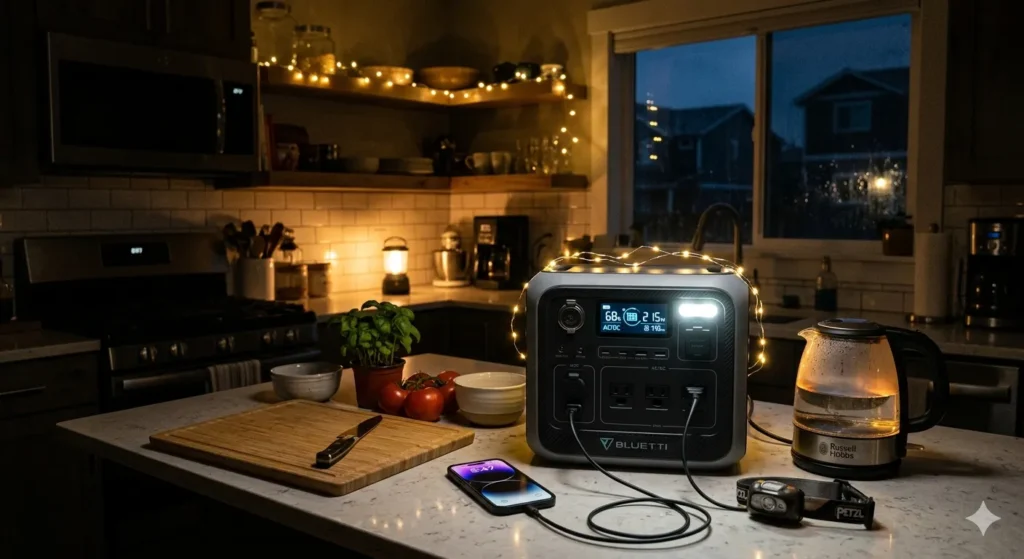
A Story That Changed My Approach Completely
My neighbor Marcus a guy who prides himself on being skeptical of anything that sounds too good came to me after his second blackout in a month.
His sump pump had failed without power.
His basement flooded. $8,000 in damage.
“I looked at generators,” he told me. “Too loud my HOA won’t allow it anyway.
Looked at solar I can’t spend twenty grand right now.
” He was genuinely stuck, and genuinely frustrated.
I showed him what I’d been researching: a mid-sized portable power station (around 1,000Wh capacity) paired with a 200W solar panel.
Total cost under $900.
He crossed his arms and looked at me the way people look at you when they’re pretty sure you’re about to waste their time.
“That’ll actually run a sump pump?”
He bought it anyway.
Three weeks later, we had another storm.
His power went out.
His sump pump kept running.
His basement stayed dry.
“I don’t understand why everyone doesn’t do this,” he texted me at 11pm, during the outage, while his neighbors were probably watching their basements fill with water.
That’s the question I’ve been sitting with since.
And the answer, I think, comes down to one thing: most people don’t have a clear, simple blueprint for putting this together themselves.
They know the pieces exist.
They just don’t know how to connect them.
This is where I started looking for something that would do the connecting for me, a guide that laid out the whole system, not just the parts.
How to Calculate Exactly What You Need (The Watt-Hour Method)
Before spending a dollar, figure out your actual power needs.
Here’s a simple worked example add up the watt-hours of the appliances you’d need during a 12-hour outage:
| Appliance | Calculation | Watt-Hours |
| Refrigerator | 150W × 6 hrs (cycles on/off) | 900 Wh |
| Wi-Fi router | 10W × 12 hrs | 120 Wh |
| Phone charging × 2 | 10W × 2 × 3 hrs | 60 Wh |
| LED lights × 4 | 10W × 12 hrs | 480 Wh |
| Laptop | 45W × 5 hrs | 225 Wh |
| Total (+ 20% buffer) | ≈ 2,142 Wh |
Add about a 20% safety margin, and you’re looking at roughly a 2,000 Wh system for a comfortable 12-hour backup of essentials.
For just Wi-Fi, phones, and lights, you could get by with 500–800 Wh.
That’s the range where truly affordable options live.
Here’s the thing most guides won’t tell you: most people dramatically overbuy or dramatically underbuy. The difference between a $250 setup and a $1,500 setup often comes down to one 20-minute calculation. Skip it, and you’ll either waste money or run out of power at exactly the wrong moment.
I spent weeks piecing this together from scattered forum posts and YouTube videos.
There’s actually a step-by-step system that handles all of this sizing, component selection, and setup in one place.
Jump ahead to see it, or keep reading for the full breakdown first.
The System That Brings It All Together
Once I understood the math, I started looking for a resource that laid out the whole approach not just theory, not a product catalog, but an actual working blueprint.
How to choose the right components.
How to size them correctly.
How to connect them.
And how to use the whole thing when an outage hits at 11pm and you’re not in the mood to read a manual.
That’s when I came across the Energy Revolution System.
I’ll be upfront: I was skeptical.
I’d already wasted hours on Reddit threads and YouTube rabbit holes that left me more confused than when I started.
But this was different it actually walked through the decisions, not just the components.
What it is
A home energy guide built specifically for people who want to stop depending on the grid without spending a fortune.
It covers load calculations, component selection, solar panel integration, and exactly how to set things up at home, step by step.
The focus is practical: not theory, not sales pitches just the working knowledge most homeowners are missing when they try to set up backup power on their own.
Think of it less as a product and more as the guide a knowledgeable electrician friend would give you over coffee.
What’s inside
The system walks you through:
- How to assess your home’s actual energy needs (without guessing)
- Which portable power stations offer the best value-per-watt-hour at different price points
- How to pair a solar panel with a battery station for daytime recharging during extended outages
- How to prioritize your loads so the most critical things stay running the longest
- The most common mistakes that cause people to overbuy or underbuy and how to avoid them
That last section alone would have saved me a lot of second-guessing.
Who it’s for
It’s designed for homeowners and renters in the US who are frustrated with rising electricity bills, tired of being blindsided by outages, and want a practical, affordable solution they can implement without calling a contractor.
No technical background required.
Pros and cons
"I didn't go looking for a product. I went looking for information that would help me stop feeling helpless every time the lights went out. This is where I found it."
👉 Take a closer look at the Energy Revolution System
Top Affordable Products to Build Your Backup Setup
Whether you follow a structured guide or build your research from scratch, here are some of the most reliable, budget-conscious products to consider for each part of your system.
Best budget portable power stations
Anker Solix C300 Compact, great for phones, laptops, and routers.
Perfect for apartment dwellers.
Around $180–$220.
Jackery Explorer 300 Affordable entry point with solar input, ideal for short outages and light loads.
Often under $250.
Anker C1000 Praised for its balance of price and output at the 1,000Wh level.
A strong all-rounder for essential appliances.
Bluetti AC2A Lightweight, fast-charging, and well-suited for work-from-home setups during outages.
Portable solar panels for recharging
Zoupw 100W Foldable Solar Panel Portable and affordable.
Pairs well with smaller stations for low-cost daytime recharging.
Renogy 200W 24V N-Type Panel A step up for faster recharge and longer outages.
Efficient even in partial shade.
For heavier loads (fridge + fan + lights)
EcoFlow DELTA 3 Classic Fast AC recharge and solid solar support.
A great mid-tier option for essential appliances during a blackout.
Jackery HomePower 3000 For extended outages where you need serious capacity.
Handles fridges, fans, and medical devices.
Worth noting: Knowing which product to buy is step two.
Step one is knowing what size you actually need and that only comes from calculating your load first.
Most people skip this step and end up disappointed.
Frequently Asked Questions
What is the cheapest way to generate electricity at home during a power outage?
The most affordable approach is pairing a budget portable power station (500–1,000Wh) with a small foldable solar panel.
You can get a functional setup for under $400 that covers Wi-Fi, phone charging, and lighting.
Add a larger station for fridge backup.
Can a portable power station run a fridge during a blackout?
Yes most modern fridges draw 100–200W.
A 1,000Wh station can run a standard fridge for 6–8+ hours (fridges cycle on and off, so real-world runtime is often longer).
For 24-hour+ coverage, pair with a solar panel for daytime recharging.
Is a portable power station better than a gas generator for indoor use?
Absolutely.
Gas generators produce carbon monoxide and must never be used indoors or in garages.
Portable power stations are completely silent, produce zero emissions, and can be used anywhere in the house.
No contest.
Can I charge a power station with solar panels during a blackout?
Yes this is one of their biggest advantages.
During an extended outage, you can use solar panels to recharge your station during the day and draw power at night.
Even a 100W panel in good sunlight can add 300–400Wh per day.
Is a UPS useful for short power outages at home?
A UPS is excellent for protecting computers and routers from sudden shutoffs it provides near-instant switchover.
Most UPS units only last 15–60 minutes though.
They’re best used alongside a larger power station for extended outages.
How do I keep Wi-Fi, lights, and a phone charged cheaply during an outage?
A 300–500Wh portable power station is more than enough.
Budget options from Jackery, Anker, or Bluetti in this range can handle a router (10W), 4 LED bulbs, and multiple phone charges easily lasting 12+ hours.
Are budget solar generators worth it for emergency backup?
Yes, for most households.
A budget solar generator bundle around $400–$600 covers the most critical needs during a standard 12-hour outage.
For whole-home backup, you’d need to scale up but for essentials, budget options are excellent value.
How do I calculate watt-hours needed for a blackout backup setup?
List each appliance you’d run, note its wattage, and multiply by the hours you’d need it.
Add up the totals, then add a 20% buffer.
The table in this article shows a worked example roughly 2,000Wh for essential appliances over 12 hours.
The Bottom Line
Power outages aren’t going away.
Electricity bills aren’t coming down.
And the idea that protecting your home from both requires a $20,000 investment is to put it plainly a myth that benefits the companies selling $20,000 systems.
A portable power station.
A small solar panel.
And the knowledge to put them together correctly.
That’s genuinely enough to keep your family comfortable through most outages without generators, without fumes, without HOA complaints, and without breaking the bank.
The math works.
The technology exists.
The only missing piece, for most people, is a clear roadmap that cuts through the noise and tells them exactly what to buy and exactly how to use it.
That’s what I was looking for.
And when I found it, I wished I’d found it two blackouts earlier.
No pressure at all but if you’re tired of sitting in the dark, losing food, and feeling at the mercy of a power company that doesn’t care, it might be worth spending a few minutes checking out the system that finally gave me a real answer.
You might find it’s exactly what you’ve been looking for.
Or you might decide it’s not for you either way, you’ll know more than you did five minutes ago.