

So you’re scrolling through Instagram at 2 AM, seeing someone your age posting about “making money while they sleep,” and you’re thinking: Is this even real?
Here’s the truth: Passive Income for Beginners is real, but it’s not what the highlight reels show you.
It won’t replace your day job in two weeks, and you definitely won’t retire by next month, but with the right approach and realistic expectations, you can build income streams that eventually require minimal daily effort.
I’m going to walk you through 10 beginner-friendly passive income strategies that actually work in 2026 no fluff, no empty promises.
Whether you’ve got $50 or $500 to start, there’s something here for you. We’ll cover automated investing, cash-back apps, affiliate marketing, and even real estate options that don’t require you to become a landlord.
Let’s get into it.
Table of Contents
What Actually Is Passive Income? (And What It’s Not)
Passive income is money you earn with minimal ongoing effort after the initial setup.
Notice I said “minimal,” not “zero.”
That’s the part most gurus conveniently forget to mention.
Active income means you trade your time directly for money your job, freelancing, hourly consulting.
Stop working, stop earning.
Passive income means you build something once (or set up a system), and it generates returns over time with light maintenance.
Think: investments paying dividends, a blog earning affiliate commissions, or automated stock portfolios.
The Catch
Most passive income streams require one or both of these upfront:
- Time investment: Creating content, learning platforms, setting up systems
- Money investment: Capital to invest, tools to purchase, inventory to stock
The “passive” part comes later, after you’ve done the work. Anyone promising instant passive income is selling you something (usually a course you don’t need).
How Much Money Do You Need to Start?
Good news: you can start with literally $0 for some strategies, or as little as $5-$10 for automated investing apps.
Here’s the reality check based on strategy:
| Strategy | Minimum to Start | Time to First Dollar | Realistic Monthly Income (Year 1) |
| Robo-advisors (Acorns, Betterment) | $5-$10 | 3-6 months | $5-$50 (depends on contributions) |
| Cash-back apps (Rakuten, Ibotta) | $0 | Immediate | $10-$50 |
| Dividend investing | $1-$100 | 1-3 months | $10-$100 |
| Affiliate marketing | $0-$100 | 6-12 months | $0-$500 |
| Real estate crowdfunding (Fundrise) | $10-$500 | 3-6 months | $20-$100 |
| Print-on-demand | $0-$50 | 3-9 months | $0-$200 |
The pattern? Lower money requirements usually mean higher time requirements, and vice versa.
What Are the Best Passive Income Ideas for Beginners in 2026?
Automated Investing with Robo-Advisors
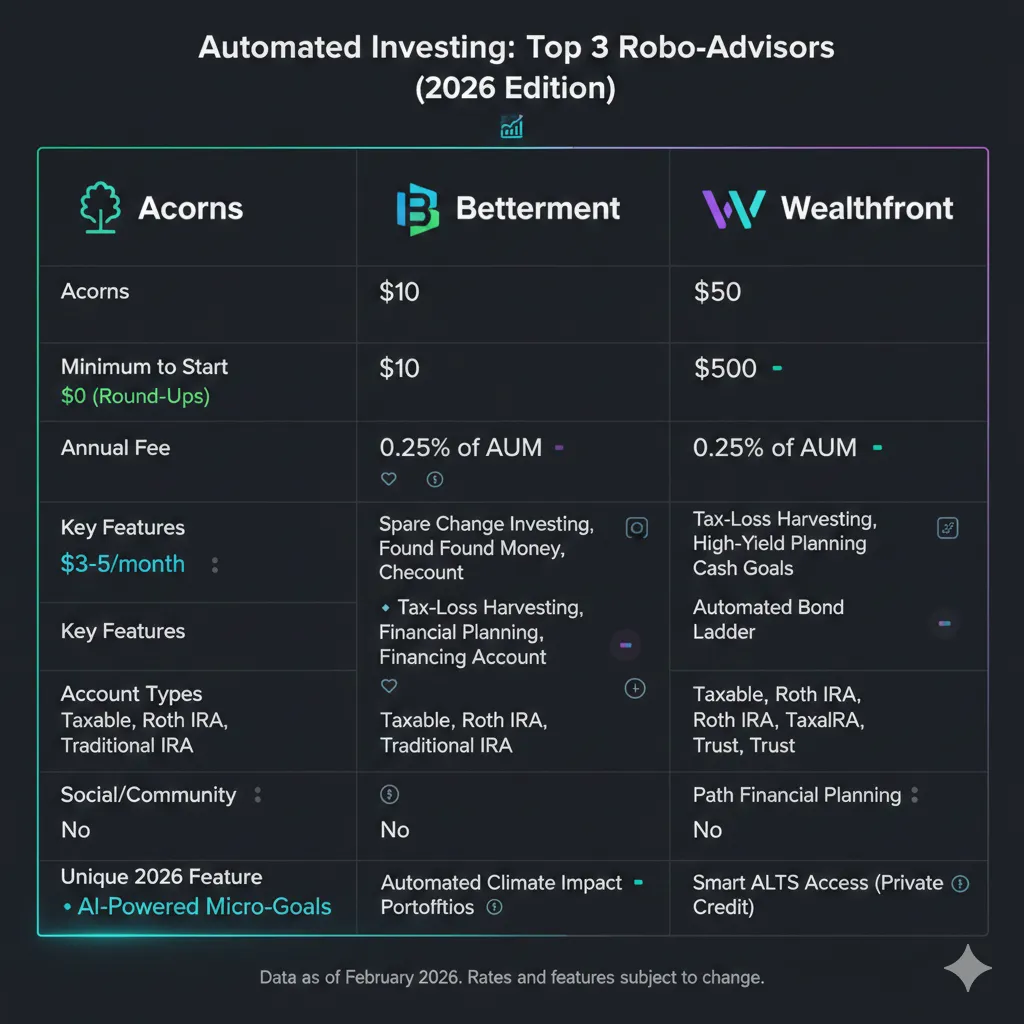
What it is: Apps that automatically invest your money into diversified portfolios of ETFs (exchange-traded funds) and rebalance everything for you.
Best for: Complete investing beginners who want hands-off wealth building.
Top platforms:
- Acorns: Rounds up your purchases to the nearest dollar and invests the change. Start with as little as $5.
- Betterment: Automated portfolios with tax-loss harvesting (fancy term for legally reducing taxes on investments).
- Wealthfront: Similar to Betterment but with slightly different features and a cash account option.
How it generates passive income: Your investments grow over time through market returns and compound interest. Some portfolios also pay dividends quarterly.
The realistic timeline: Don’t expect big returns in month one. With consistent $50-$100 monthly contributions, you might see $500-$2,000 in total growth after your first year (depending on market performance).
The real magic happens years down the line through compounding.
The Catch:
- Market risk is real your account will go down sometimes
- Annual fees typically 0.25%-0.50% (still cheaper than traditional advisors)
- You need discipline to keep contributing during market dips
Dividend Stock Investing
What it is: Buying shares of companies that pay you regular cash dividends (usually quarterly) just for owning the stock.
Best for: People who want to build long-term wealth and don’t panic when stocks dip.
Top platforms for beginners:
- M1 Finance: Create custom “pies” of dividend stocks and automate everything
- Public.com: Commission-free with fractional shares and a social learning feed
- Robinhood: Zero fees and fractional shares (just avoid the day-trading temptation)
How it works: You buy dividend-paying stocks like Coca-Cola, Johnson & Johnson, or dividend ETFs. They pay you a percentage of profits every quarter. You reinvest those dividends to buy more shares (compounding).
Real example: Invest $1,000 in a dividend ETF yielding 3% annually.
You’d earn roughly $30/year in dividends. Keep reinvesting for 10 years while adding $100/month, and you could have $15,000+ generating $450/year passively.
The Catch:
- Dividend yield ≠ guaranteed income (companies can cut dividends)
- Takes years to build meaningful income
- You’ll need thousands invested to see substantial monthly cash
Cash-Back Apps (The Easiest Entry Point)
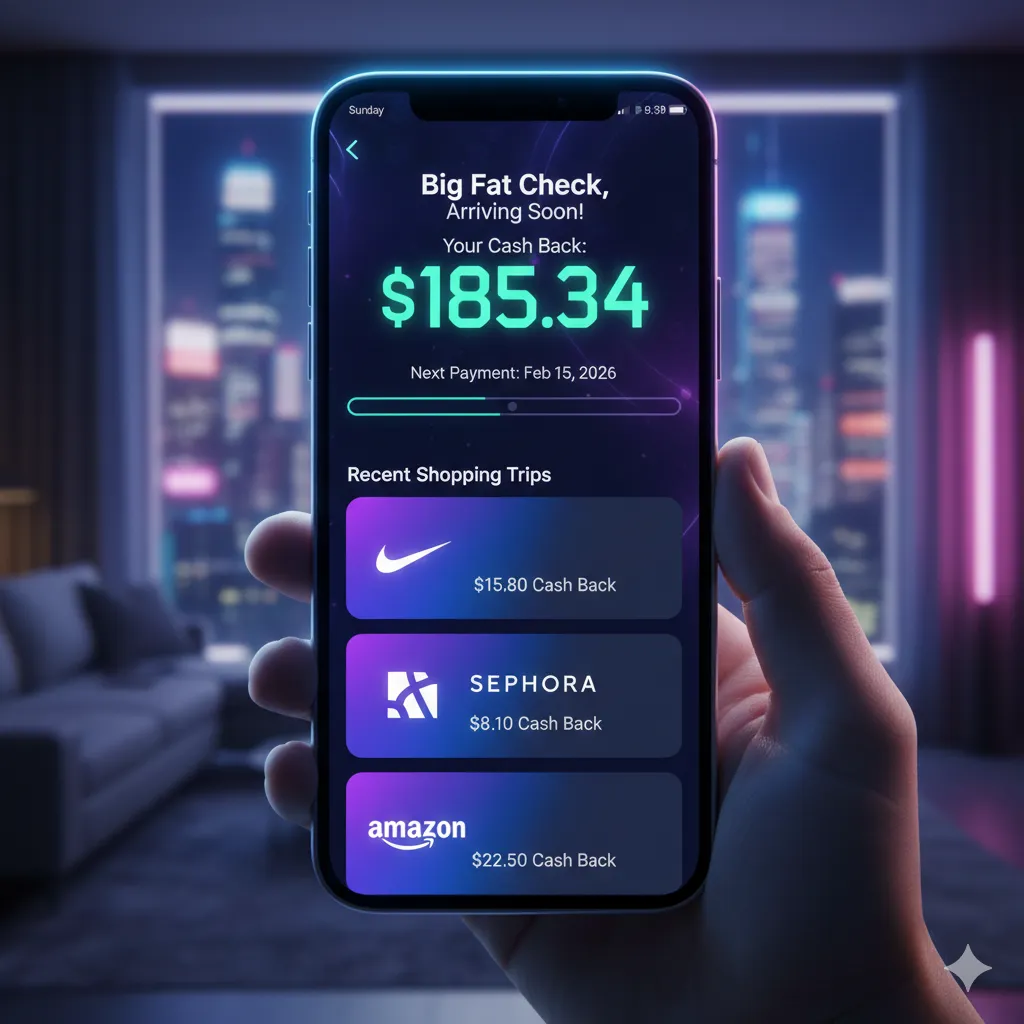
What it is: Apps that pay you for shopping at stores you already use.
Best options:
How it works: Shop through their app or browser extension.
The retailer pays them a commission, they share part of it with you.
You get paid quarterly or can cash out after hitting minimums ($5-$20 typically).
The realistic earnings: Most beginners earn $10-$50/month depending on spending. If you do all your online shopping through Rakuten, you might hit $200-$500/year with zero extra effort.
The Catch:
- This isn’t “income” as much as savings
- You’re not getting rich think coffee money, not rent money
- Requires discipline to not overspend just to earn rewards
Real Estate Crowdfunding (Without Being a Landlord)
What it is: Investing in real estate projects alongside other investors through online platforms.
You own a tiny piece of apartment buildings, commercial properties, or development projects.
Top beginner platforms:
- Fundrise: Start with just $10, diversified real estate portfolios (eREITs)
- RealtyMogul: Focuses on commercial properties, typically $5,000 minimum
- Yieldstreet: Alternative investments beyond just real estate, $5,000 minimum
How it generates income: Properties generate rental income and appreciate in value. You receive quarterly distributions (like dividends).
Historical returns: Fundrise has averaged 7-12% annual returns historically (past performance ≠ future results).
The Catch:
- Your money is locked up for 5+ years in many cases
- Not as liquid as stocks you can’t easily sell if you need cash
- Fees typically 1% annually
- Platform risk: if the company fails, your investment is at risk
Affiliate Marketing (The Long Game)
What it is: Recommending products through special links. When someone buys through your link, you earn a commission.
Best for: People willing to create content (blog, YouTube, TikTok, Instagram) and wait 6-12 months for results.
Using privacy-first AI agents like OpenClaw can help automate your content research while keeping your data secure.
How to start:
- Pick a niche you actually know about (fitness, tech, cooking, personal finance)
- Create helpful content (blog posts, videos, social posts)
- Join affiliate programs (Amazon Associates, ClickBank, individual company programs)
- Add affiliate links naturally in your content
- Drive traffic through SEO, social media, or ads
Learning resources:
- Udemy – Free Affiliate Marketing Course for Beginners
- Coursera – Affiliate Marketing Specialization
- Savage Affiliates (franklinchett.com) – comprehensive paid course
Realistic timeline:
- Months 1-6: You’re building, earning $0-$50/month
- Months 6-12: Traffic grows, $50-$500/month possible
- Year 2+: Compounding content, $500-$5,000+/month (if you’re consistent and good)
The Catch:
- This is NOT passive initially requires months of content creation
- 90% of beginners quit before seeing results
- Algorithm changes can tank your traffic overnight
- Income fluctuates wildly month-to-month

High-Yield Savings Accounts & CDs
What it is: Parking cash in accounts that pay better interest than traditional savings accounts.
Current rates (early 2026): 4-5% APY on high-yield savings (rates change with Federal Reserve policy).
Best for: Your emergency fund or money you’ll need within 1-3 years.
Top options:
- SoFi: High-yield savings with no fees
- Online banks like Marcus, Ally, or CIT Bank
The math: Park $5,000 at 4.5% APY = $225/year in interest, completely passive.
The Catch:
- Interest rates fluctuate with the economy
- Barely keeps up with inflation
- Not really “income” more like preserving purchasing power
Fractional Share Investing with Auto-Deposits
What it is: Buying pieces of expensive stocks (like Apple or Tesla) instead of full shares, with automatic weekly or monthly investments.
Best platforms:
- Stash: Invest as little as $5, educational content included
- Public.com: Social features help you learn from others
- SoFi Invest: Automated and active investing options
The strategy: Set up automatic $25-$100 weekly transfers into a diversified ETF or your favorite stocks. Let dollar-cost averaging smooth out market volatility.
Why it works: You’re building wealth consistently without timing the market. After a year of $100/week contributions, you’ll have invested $5,200+.
The Catch:
- Still subject to market risk
- Building actual passive income (dividends) takes thousands invested
- Requires behavioral discipline during downturns
Copy Trading (Semi-Passive Investing)
What it is: Automatically copying the trades of experienced investors.
Platform:eToro is the main player here.
How it works: You allocate money to copy a top trader’s portfolio. When they buy Apple, your account buys Apple proportionally. When they sell, you sell.
The appeal: Leverage someone else’s expertise while you learn.
The Catch:
- Past performance of traders doesn’t guarantee future results
- You’re still responsible for choosing who to copy
- Fees can add up (spread markups and withdrawal fees)
- You don’t learn actual investing skills this way
Print-on-Demand (Creative Side Hustle)
What it is: Designing graphics for t-shirts, mugs, phone cases, etc. When someone orders, a third-party prints and ships it. You earn the profit margin.
Top platforms:
- Printify (integrates with Shopify, Etsy)
- Printful
- Redbubble
- Teespring
How to start:
- Create designs (use Canva if you’re not a designer)
- Upload to platform
- Set your profit margin
- Market through social media, SEO, or ads
- Orders come in, you do nothing else
Realistic expectations: Most beginners make $0-$50/month for the first 6 months. Successful sellers who master marketing can hit $500-$2,000/month after a year.
The Catch:
- Extremely saturated market
- Requires marketing skills (not actually passive)
- Design quality matters generic designs flop
- Profit margins are thin ($2-$10 per sale typically)
Passive Income Apps (Micro-Earnings)
What it is: Apps that pay you for doing almost nothing sharing internet bandwidth, watching ads, completing surveys.
Example:Honeygain – pays you for sharing unused internet bandwidth.
Realistic earnings: $5-$20/month per app if you use several.
The Catch:
- Payments are tiny think beer money, not bill money
- Privacy concerns (you’re sharing data/bandwidth)
- Many apps have high payout thresholds ($20-$50)
- Time-to-payout can be months
Verdict: Stack 3-4 of these for an extra $50-$100/month, but don’t expect more.
“If you want to see exactly how these work, check out my deep-dive on Seeker Phone Rewards to see if it’s worth your time.”
The 2026 Tech Stack for Passive Income.
Perplexity/ChatGPT: For researching niche topics.
Canva Magic Studio: For creating “Print-on-Demand” designs in seconds.
Zapier/Make: For automating the “boring stuff” between your apps.
Which Passive Income Strategy Should YOU Start With?
Here’s my honest recommendation based on your situation:
| Your Situation | Best Starting Strategy | Why |
| $0 to start, employed | Cash-back apps + learn affiliate marketing | No cost, immediate returns + long-term potential |
| $50-$500 saved, beginner investor | Robo-advisor (Acorns or Betterment) | Automated, diversified, educational |
| Have audience or enjoy creating | Affiliate marketing or print-on-demand | Leverage existing skills/following |
| Want true set-and-forget | Dividend ETFs through M1 Finance | Automate everything, proven long-term strategy |
| Risk-tolerant, $500+ saved | Real estate crowdfunding (Fundrise) | Higher potential returns, diversification |
My personal take: If I were starting today with $200 and a full-time job, I’d do this:
- Put $100 into a robo-advisor with auto-deposits ($25/week)
- Sign up for Rakuten and Ibotta for instant cash-back
- Spend evenings learning affiliate marketing or building a niche blog
- Reinvest ALL early earnings back into growth
The Biggest Mistakes Beginners Make (And How to Avoid Them)
1. Expecting fast results Reality: Most strategies take 6-12 months minimum to show meaningful returns. Patience is the actual cheat code.
2. Spreading too thin Trying 10 strategies at once = mastering none. Pick 1-2, go deep, then expand.
3. Not tracking progress Use a simple spreadsheet to monitor each income stream monthly. What gets measured gets improved.
4. Quitting right before the inflection point That blog or YouTube channel? Month 11 might be the month it clicks. Most people quit at month 8.
5. Falling for “passive income courses” scams If someone’s charging $997 to teach you “secrets,” their passive income is selling you that course. Learn free through YouTube, blogs, and library books first.
Frequently Asked Questions
Can I build passive income if I have a full-time job?
Absolutely. In fact, having a stable job is ideal because it removes desperation. Start with strategies requiring minimal daily time: automated investing, cash-back apps, or 30 minutes/day building affiliate content on weekends.
How long does it usually take to see results from passive income streams?
Depends wildly on the strategy. Cash-back apps pay immediately. Robo-advisors might take 3-6 months to show noticeable growth. Affiliate marketing or blogs often take 6-12 months. Real estate crowdfunding pays quarterly but takes years to compound meaningfully.
What are the biggest risks of passive income for beginners?
- Market volatility (investments can lose value)
- Platform risk (companies going bankrupt)
- Scams and get-rich-quick schemes
- Opportunity cost (time spent could’ve been used learning higher-paying skills)
- Tax complications if you’re not tracking income properly
Which is better for beginners: investing or starting an online side business?
Honest answer: do both at different scales. Invest what money you can spare into automated portfolios (foundation for retirement). Simultaneously build a side business for higher upside potential. Investing is safer and proven. Side businesses have unlimited earning potential but higher failure rates.
How do taxes work on passive income?
- Dividends/interest: Taxed as ordinary income or at lower qualified dividend rates
- Capital gains: Taxed when you sell investments (0-20% depending on income and holding period)
- Affiliate/business income: Self-employment tax applies (roughly 15.3% + income tax)
- Cash-back apps: Technically taxable income, rarely reported unless substantial
Use a tax software like TurboTax or consult a CPA once you’re earning $500+/month passively.
How much passive income do I need to reach financial independence?
The common target: 25-30x your annual expenses invested.
If you spend $40,000/year, you’d need $1,000,000-$1,200,000 invested generating 4% annually ($40,000-$48,000) to theoretically never work again.
That’s decades away for most people, which is why starting today matters.
Your Next Steps (Start This Week)
Don’t overcomplicate this. Pick ONE strategy from this article and start this week:
If you have 30 minutes: Open an Acorns or Betterment account and set up $10-$25 weekly auto-deposits.
If you have 2 hours: Sign up for Rakuten and Ibotta, install browser extensions, and route your next 5 online purchases through them.
If you have time but no money: Start learning affiliate marketing through free Udemy courses and brainstorm 10 blog post ideas in a niche you know well.
If you have $100+: Open an M1 Finance account, create a dividend-focused “pie,” and schedule monthly contributions.
The hardest part isn’t picking the right strategy it’s actually starting.
The second hardest part? Sticking with it when results are slow.
Remember: The “passive” comes after the work.
Everyone posting screenshots of their passive income started years ago, grinding when nobody was watching.
Your turn starts now.