
Stop Wasting Money: How to Build Your First Sales Funnel That Actually Converts (2026)


You’ve built a website.
You’re driving traffic. People are visiting your pages… but they’re not buying.
Sound familiar?
Here’s the hard truth: 96% of visitors aren’t ready to buy on their first visit.
Without a sales funnel, you’re leaving money on the table every single day.
The good news?
Building your first sales funnel isn’t as complicated as it sounds.
In this guide, you’ll learn exactly how to build your first sales funnel step-by-step even if you’re starting from zero.
By the end, you’ll have a clear roadmap to turn casual browsers into paying customers.
Table of Contents
What Exactly Is a Sales Funnel? (In Simple Terms)
Think of a sales funnel like a dating relationship.
You don’t propose marriage on the first date, right?
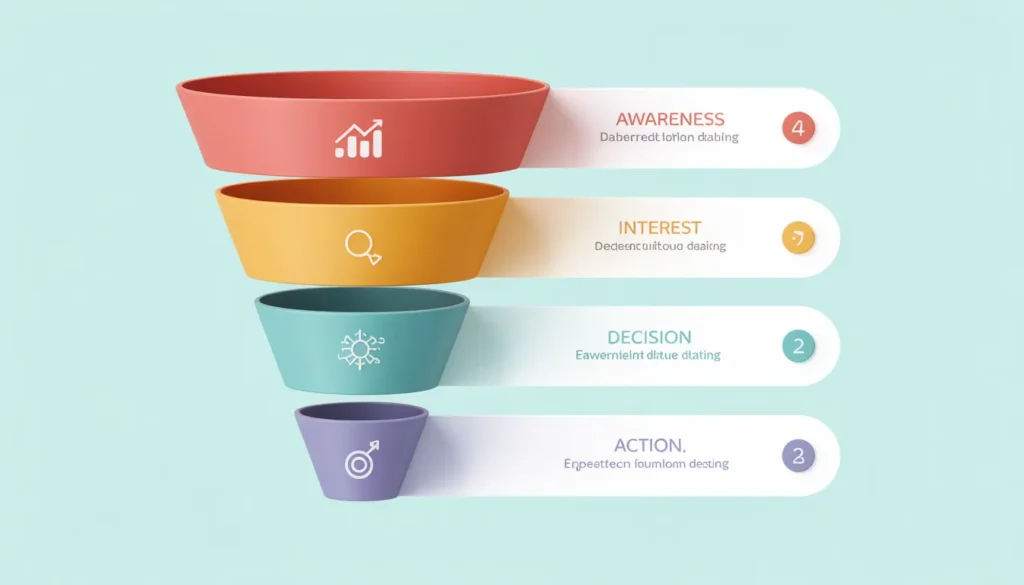
A sales funnel is the journey your potential customers take from first hearing about you to becoming loyal buyers.
It’s called a “funnel” because many people enter at the top, but only some make it all the way through to purchase.
The 4 Core Stages:
- Awareness – They discover you exist
- Interest – They learn more about what you offer
- Decision – They consider buying from you
- Action – They make a purchase
Why Your Business Desperately Needs a Sales Funnel
Still not convinced? Here’s what happens when you skip the funnel:
❌ Random acts of marketing – Posting content with no strategy
❌ Lost leads – Visitors leave and never return
❌ Wasted ad spend – Paying for traffic that doesn’t convert
❌ Revenue chaos – Unpredictable income month to month
But when you build a proper funnel:
✅ Automated nurturing – Leads move through stages automatically
✅ Higher conversions – More visitors become customers
✅ Predictable revenue – You can forecast sales
✅ Scalable growth – What works once can work 100x
How to Build Your First Sales Funnel: 7 Simple Steps
Ready to stop losing customers?
Follow this proven framework.
Step 1: Define Your Target Audience (Buyer Persona)
You can’t sell to everyone.
Trying to do so means you’ll sell to no one.
Ask yourself:
- Who has the problem I solve?
- What are their biggest pain points?
- Where do they hang out online?
- What’s their budget?
Pro tip: Create 1-2 detailed buyer personas.
Give them names, jobs, and specific challenges.
This makes writing copy 10x easier.
Step 2: Map Out Your Customer Journey
Now, think about how your ideal customer moves from stranger to buyer.
Example for an online course:
- Awareness: Reads a blog post about solving their problem
- Interest: Downloads a free checklist or guide
- Decision: Watches a webinar or case study
- Action: Purchases the course
Document each touchpoint.
What content will they see?
What action will they take?
Step 3: Create Valuable Lead Magnets
Here’s where most beginners fail: they ask for the sale too soon.
Instead, offer something free and valuable in exchange for their email address.
This builds trust and keeps the conversation going.
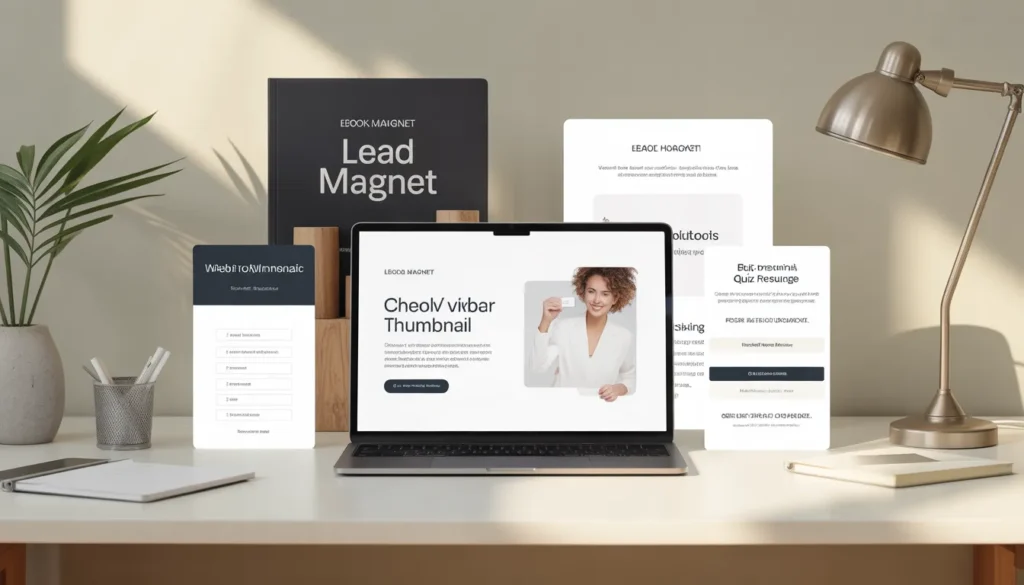
High-converting lead magnets:
- Free ebooks or guides
- Checklists or templates
- Webinars or video training
- Free trials or samples
- Quizzes or assessments
Key rule: Your lead magnet should solve ONE specific problem quickly.
Step 4: Build Your Landing Pages
Your landing page is where visitors become leads.
It needs to do ONE thing: convince them to take action.
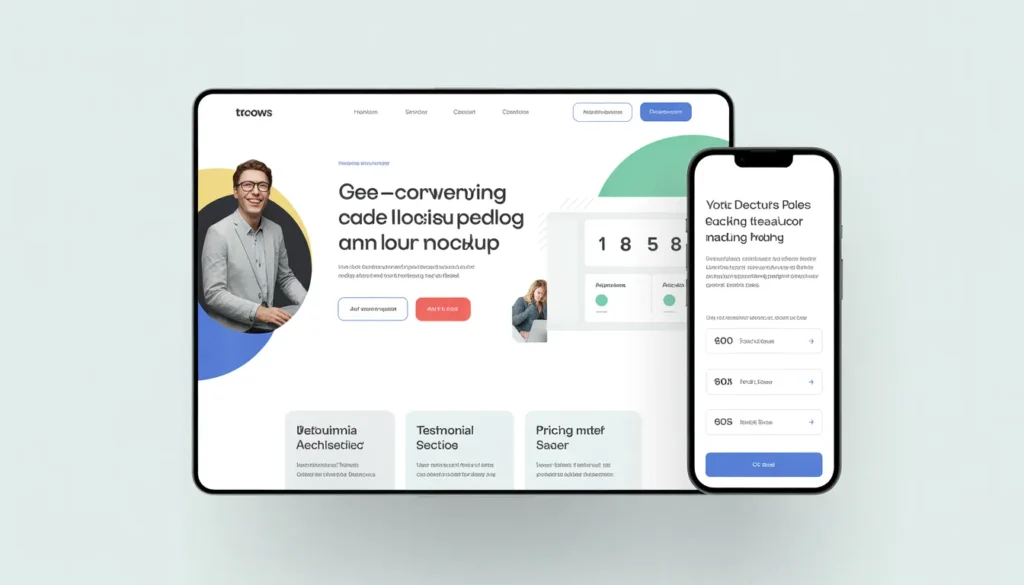
Essential elements:
- Headline that speaks to their pain point
- Subheadline explaining the benefit
- Bullet points highlighting what they’ll get
- Social proof (testimonials, numbers, logos)
- Clear CTA button (“Get My Free Guide” not “Submit”)
- Minimal distractions (no navigation menu!)
Keep it simple.
One page.
One goal.
One action.
Step 5: Set Up Email Nurture Sequences
This is where the magic happens.
Most people won’t buy immediately.
Your email sequence warms them up.
Basic 5-email sequence:
- Welcome email – Deliver the lead magnet + introduce yourself
- Value email – Share a helpful tip or story
- Problem-awareness email – Highlight the cost of inaction
- Solution email – Show how your product solves their problem
- Sales email – Make the offer with urgency
Pro tip: Space these out over 7-14 days.
Don’t rush the relationship.
Step 6: Create a Sales Page That Converts
When they’re ready, your sales page needs to seal the deal.
Must-have components:
- Compelling headline with benefit
- Problem agitation (remind them of their pain)
- Your solution and how it works
- Features → Benefits translation
- Social proof (testimonials, case studies)
- Risk reversal (guarantee, refund policy)
- Clear pricing and CTA
- FAQ section to overcome objections
Step 7: Track, Test, and Optimize
Your funnel isn’t “set it and forget it.” You need data.
Key metrics to watch:
- Conversion rate at each stage
- Email open and click rates
- Cost per lead
- Customer acquisition cost (CAC)
- Lifetime value (LTV)
Test one thing at a time:
- Headlines
- CTA button colors
- Email subject lines
- Lead magnet formats
- Pricing structures
Small improvements compound.
A 10% boost at each stage can double your revenue.
⚠️ Warning: Don’t Let Hidden Leaks Destroy Your Funnel
Here’s something most beginners don’t realize: you can build a perfect funnel and still lose money.
Why? Because of revenue leaks.
These are invisible problems that kill conversions:
- Slow page load times
- Confusing navigation
- Broken checkout processes
- Poor mobile experience
- Unclear value propositions
The scary part? You might not even know they exist until it’s too late.
Before you invest more time and money into your funnel, make sure it’s not leaking potential customers. There’s a free tool that scans your entire funnel and identifies exactly where you’re losing sales then shows you how to fix it.
👉 Check your funnel for hidden revenue leaks here.
It takes 2 minutes and could save you thousands in lost sales.
Common Sales Funnel Mistakes (And How to Avoid Them)
Mistake #1: Skipping the Nurture Stage
Wrong: “Buy now!” on first visit
Right: Build trust first, sell second
Mistake #2: Too Many CTAs
Wrong: Confusing visitors with 5 different actions
Right: One clear next step per page
Mistake #3: Ignoring Mobile Users
Wrong: Desktop-only design
Right: Mobile-first (over 60% of traffic is mobile)
Mistake #4: Not Testing
Wrong: Assuming your first version is perfect
Right: Test everything, improve constantly
Mistake #5: Giving Up Too Soon
Wrong: Expecting results in 48 hours
Right: Funnels need 30-90 days to optimize
Ready to Plug the Leaks in Your Funnel?
Let’s be honest: building a funnel is hard work.
You’ve got the traffic.
You’ve created the content.
You’ve set up the emails.
But are you actually converting visitors into customers?
Most small business owners lose 20-40% of potential revenue without even realizing it.
These aren’t big, obvious problems they’re subtle issues like:
- A confusing button that nobody clicks
- A form field that frustrates users
- A pricing page that creates doubt
- A checkout process that’s too long
The worst part? You can’t fix what you can’t see.
That’s why smart business owners use tools to identify these hidden conversion killers before they drain their revenue.
💡 Discover exactly where your funnel is leaking money and how to fix it in minutes.
It’s like having a conversion expert audit your entire business for free.
Tools to Build Your Sales Funnel (Beginner-Friendly)
You don’t need expensive software to start.
Here’s a simple stack:
Landing Pages:
- Carrd (free, simple)
- Leadpages (paid, powerful)
- ClickFunnels (all-in-one)
Email Marketing:
- MailerLite (free up to 1,000 subs)
- ConvertKit (creator-friendly)
- ActiveCampaign (advanced automation)
Payment Processing:
- Stripe
- PayPal
- Gumroad (for digital products)
Analytics:
- Google Analytics (free)
- Hotjar (heatmaps)
- Facebook Pixel (ad tracking)
Start simple.
You can always upgrade as you grow.
Frequently Asked Questions (FAQ)
How long does it take to build a sales funnel?
For beginners, expect 2-4 weeks to build your first basic funnel.
This includes creating your lead magnet, setting up landing pages, and writing email sequences.
Don’t rush quality matters more than speed.
How much does it cost to build a sales funnel?
You can start for free using tools like Carrd, MailerLite’s free plan, and Google Analytics.
As you scale, expect to invest $50-$300/month on premium tools.
The ROI typically pays for itself within the first few customers.
Do I need technical skills to build a funnel?
No.
Modern drag-and-drop builders make it easy for non-technical people.
If you can use WordPress or Wix, you can build a sales funnel.
Focus on strategy over technical perfection.
What’s the most important part of a sales funnel?
Your lead magnet.
If you can’t attract emails, nothing else matters.
Spend 40% of your time creating an irresistible free offer that solves a real problem for your audience.
How many emails should be in my nurture sequence?
Start with 5-7 emails over 10-14 days.
This gives you enough touchpoints to build trust without overwhelming subscribers.
You can always add more later based on your data.
Can I build a sales funnel for a service-based business?
Absolutely.
The principles are the same: attract → nurture → convert. Instead of a product purchase, your “action” stage might be booking a consultation call or requesting a quote.
How do I know if my funnel is working?
Track these metrics:
- Landing page conversion rate (aim for 20-40%)
- Email open rate (aim for 25-40%)
- Email click-through rate (aim for 2-5%)
- Overall funnel conversion rate (visitors to customers)
If numbers are low, test and optimize one element at a time.
Conclusion: Your First Sales Funnel Starts Today
Building your first sales funnel might feel overwhelming right now.
But remember: every expert was once a beginner.
You don’t need perfection.
You need progress.
Start with one stage.
Create one lead magnet.
Write one email.
Launch one landing page.
Then measure. Then improve.
Then scale.
Before you know it, you’ll have a system that works for you 24/7 turning strangers into leads, leads into customers, and customers into raving fans.
🎯 One Last Thing…
You’ve learned how to build your funnel.
You know the steps.
You understand the strategy.
But here’s what could derail everything:
Hidden conversion problems that silently kill your results.
Slow load times.
Confusing layouts.
Friction points you can’t see.
Don’t let invisible leaks waste all your hard work.
🔧 Run a free funnel health check at savezly.com and discover exactly what’s costing you sales and how to fix it today.
Your future customers are waiting.
Go build something amazing.
Ready to take action? Pick ONE step from this guide and complete it today.
Your first sale through your new funnel is closer than you think.