Player Guide
Can You Predict The Most Popular Phone?
Learn how to think through phone matchups in Savezly without turning the challenge into a phone review.

Start With The Matchup, Not The Specs
Two phones appear on screen.
One might be the phone you use every day. The other might be the one you think more people would choose.
Savezly asks you to separate those two thoughts.
The Phones challenge is not a buying guide, a review, or a specs comparison. It is a visual prediction challenge where your job is to read the matchup and predict what most people would choose.
Phone matchups can feel personal fast.
Maybe you prefer one operating system. Maybe you care about camera details, battery life, price, or design. Maybe you have used one brand for years and trust it.
Those opinions are real, but they are not the whole game.
In Savezly, the better question is not:
Which phone do I like more?
The better question is:
Which phone would most people choose in this matchup?
That shift matters. A phone can be technically impressive and still feel less familiar to a casual player. Another phone can be less exciting to you personally but easier for a wider audience to recognize.
What The Phones Challenge Is
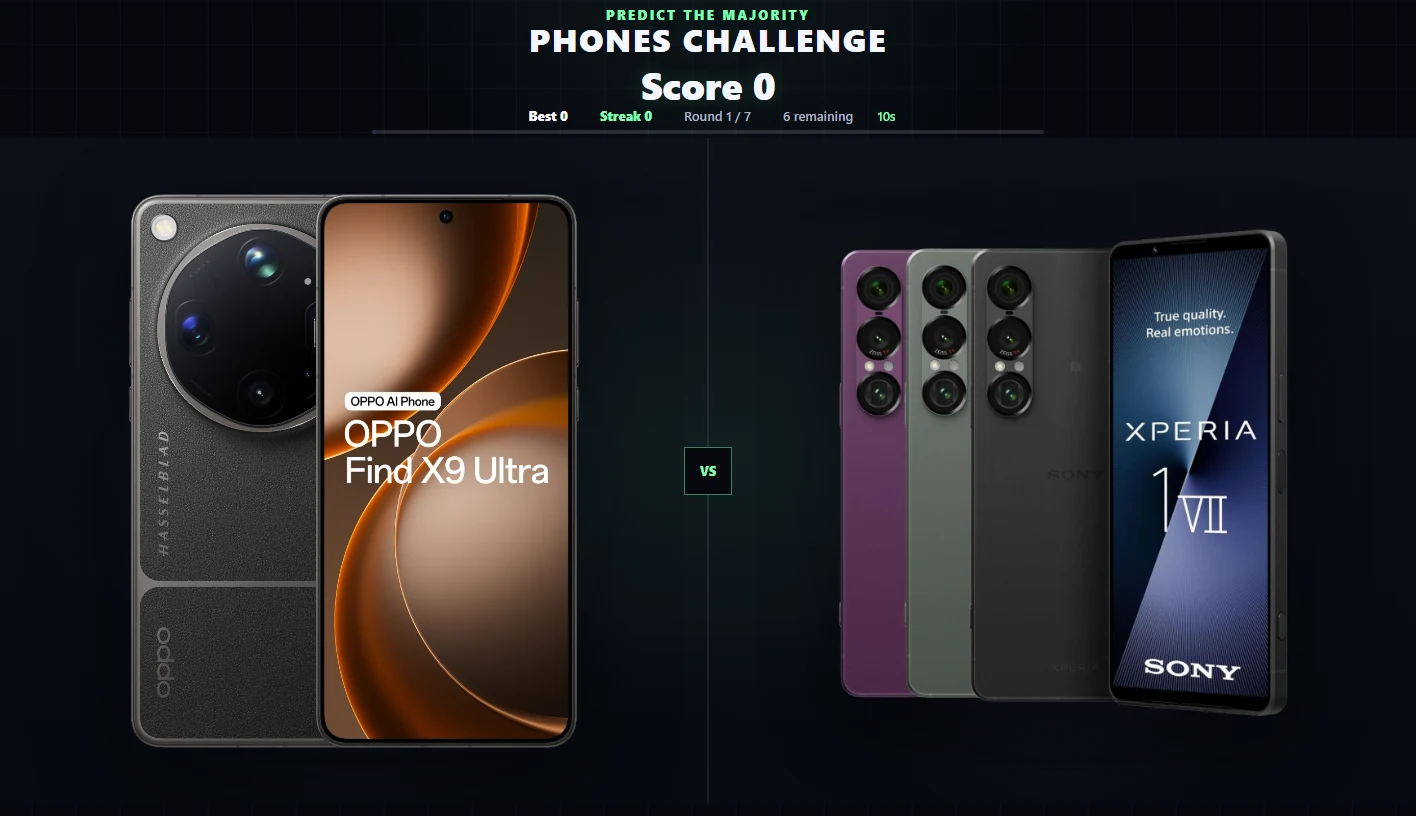
The Phones challenge is a Savezly category built around quick visual phone matchups.
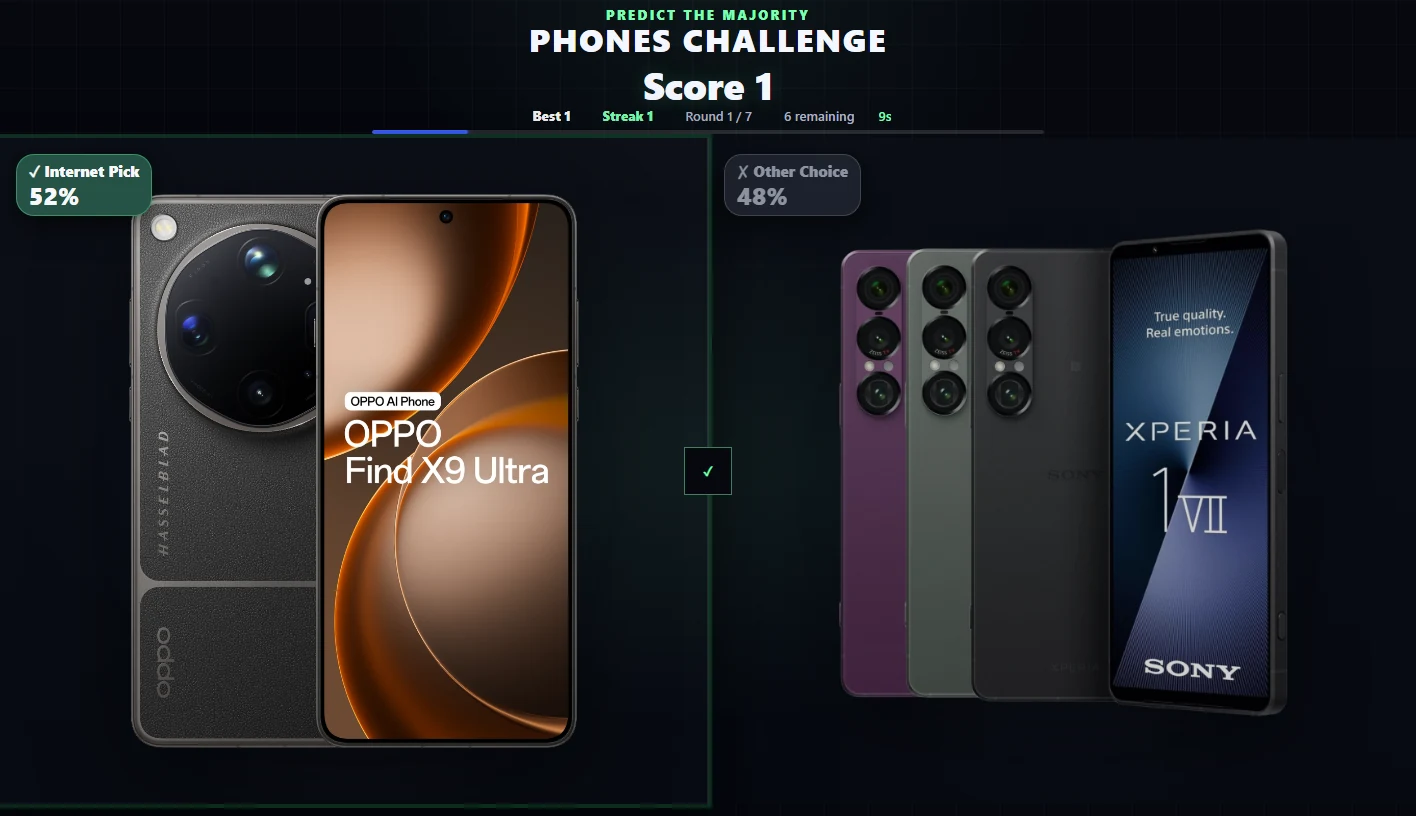
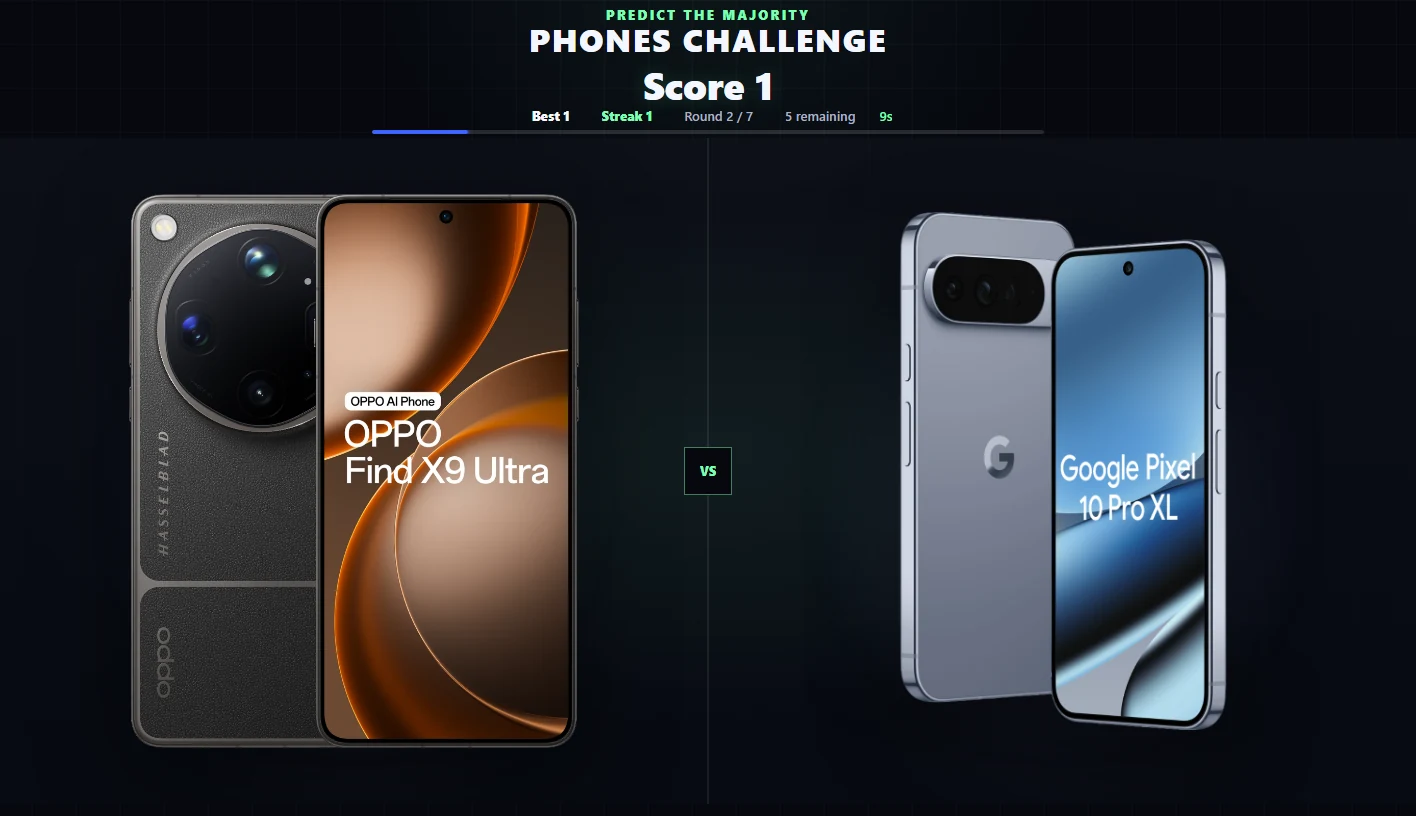
Each round shows two phone options. You predict which one the majority would choose inside the game.
You are not judging the best phone in real life. You are not choosing the best value, the best camera, or the most advanced specs. You are making a quick read of what a wider audience might pick.
If you are new to the game, start with How To Play Savezly. If you already understand the basics, the Phones challenge is a good place to practice separating personal preference from crowd prediction.
Favorite Phone Versus Crowd Prediction
Your favorite phone is personal.
Your prediction is about the crowd.
Sometimes those point to the same choice. If your favorite also feels widely recognized, familiar, and easy for many people to choose, it may be a strong prediction.
But sometimes your favorite can pull you away from the better read.
You might know more about one phone than most players. You might care about features that are invisible in a fast visual matchup. You might prefer a brand that has a strong fan base but less broad recognition.
Before selecting, pause and ask:
- Am I choosing the phone I personally like?
- Or am I predicting the phone most people would choose?
That small pause is the heart of the Phones challenge.
After you understand the matchup, try applying the idea in a live round:
Test A Phones Prediction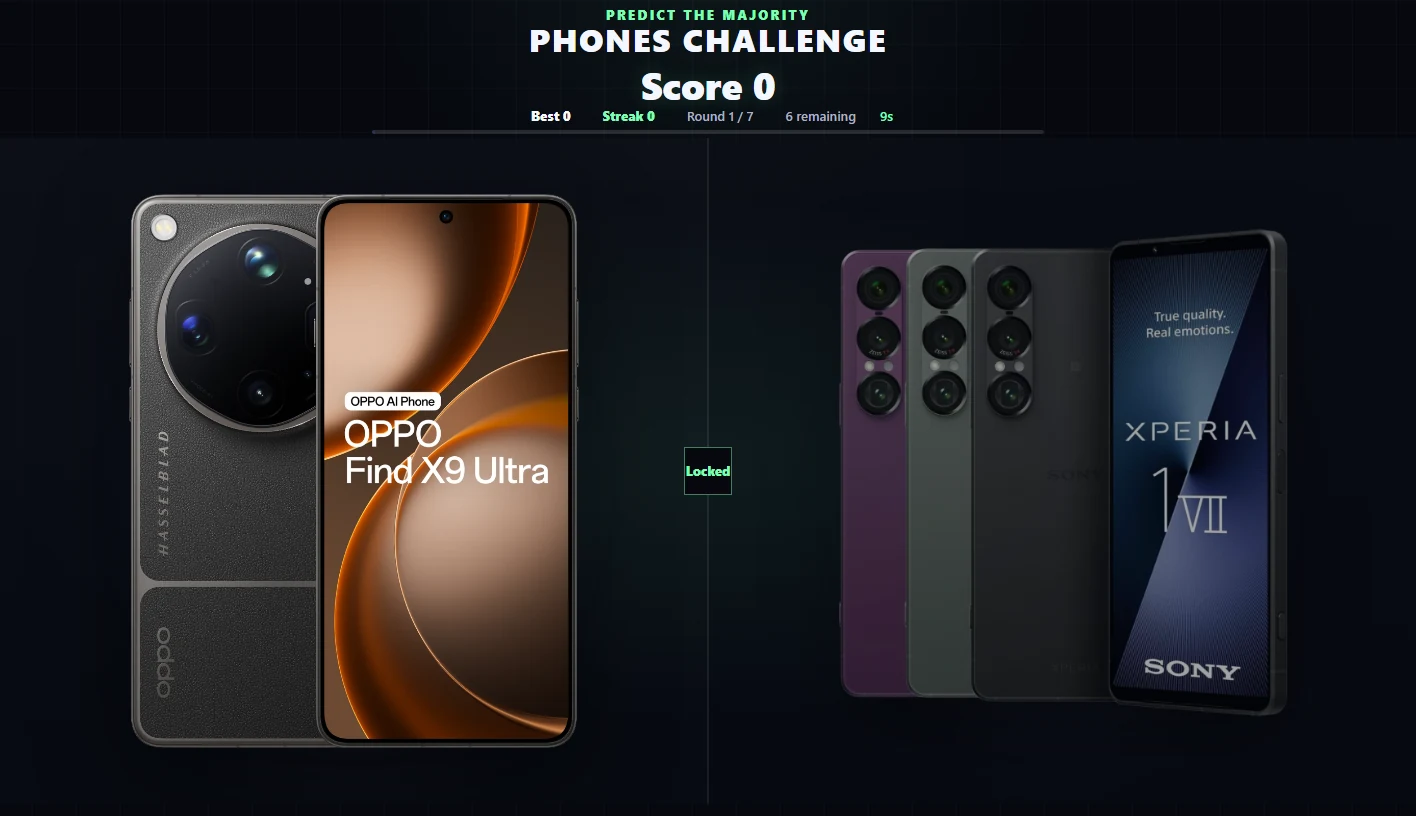
What To Notice In A Phone Matchup
You do not need to become a phone expert to play better.
Most Savezly phone decisions can start with a few simple signals: recognition, familiarity, broad appeal, and first impression.
Recognition
Recognition is about what people identify quickly.
Ask yourself:
- Which phone would more people recognize at a glance?
- Which one feels easier to place without reading specs?
- Which option looks more familiar to a casual player?
Recognition is useful because Savezly rounds move quickly. If one option feels instantly recognizable, that may influence what many players choose.
Familiarity
Familiarity is about comfort.
A phone might feel familiar because people have seen it often, heard about it often, or associate it with a brand they already know.
Ask:
- Which option feels less confusing?
- Which one would a non-expert understand faster?
- Which phone feels more common in everyday conversation?
Familiarity does not make a phone better. It only gives you a clue about how a wider audience might react.
Broad Appeal
Broad appeal is about crossing beyond a smaller fan base.
Some phones inspire strong loyalty from specific groups. Others may feel easier for many different players to choose.
Ask:
- Which option could appeal to more types of people?
- Which one feels easier to recommend casually?
- Which choice would make sense even to someone who does not follow phone news?
Broad appeal is often more useful than deep technical knowledge in a fast prediction round.
First Impression
First impression matters because Savezly is visual.
Players react to what is on screen. They are not reading spec sheets or comparing long reviews during a round.
Ask:
- Which option makes the faster impression?
- Which one feels clearer in the matchup?
- Which phone would a player understand first?
The first impression is not always correct, but it is often part of the prediction.
Common Phone Prediction Mistakes
The biggest mistake is turning the round into a personal phone debate.
Savezly is not asking you to defend your phone choice. It is asking you to predict the majority choice inside the game.
Watch for these common mistakes:
- Picking the phone you personally use.
- Treating specs as the only thing that matters.
- Assuming brand loyalty always wins.
- Reading one result as a permanent phone ranking.
- Treating Savezly as official popularity data.
If your prediction is wrong, it does not mean the phone you chose is bad. It only means the matchup did not go the way you expected.
Savezly results are entertainment. They are not official rankings, surveys, market research, or endorsements from any phone brand.
How To Practice The Phones Challenge
The easiest way to improve is to play a few phone rounds with one clear habit:
Think before you choose.
Before clicking, ask:
- Which phone do I like?
- Which phone would most people choose?
- What signal is guiding my prediction?
If you are choosing because of recognition, say that in your head. If you are choosing because of familiarity, notice it. If you are choosing because of broad appeal, make that the reason.
This does not guarantee a correct prediction. It simply helps you play with a cleaner thought process.
For broader prediction habits, read How To Predict What Most People Would Choose.
Frequently Asked Questions
Is This A Phone Ranking?
No. The Phones challenge is not an official phone ranking.
Savezly is an entertainment game. Results should not be treated as market research, survey data, buying advice, or factual popularity rankings.
Should I Pick The Phone I Use?
Only if you think most people would choose it.
The phone you use may be a strong prediction in some matchups, but it should not be your automatic answer. Try to separate your own preference from the crowd prediction.
Do Specs Matter In Savezly?
Specs can influence how people think about phones, but Savezly rounds are fast visual matchups.
Most players are not comparing full technical details during a round. Recognition, familiarity, broad appeal, and first impression are often more useful gameplay prompts.
Are Phones Results Official?
No. Phones results in Savezly are not official rankings or verified popularity data.
They are part of the game experience. The goal is to predict what you think the majority would choose inside Savezly.
Ready To Try A Phones Matchup?
Now you know the main idea:
Do not just choose the phone you like. Predict the phone most people would choose.
Look at the matchup. Notice recognition, familiarity, broad appeal, and first impression. Then make your read.
Play The Phones Challenge